News
2026-09-23
Completion of Vilnius Railway Junction Electrification Marks Key Milestone in Electrifying the Vilnius–Klaipėda Railway Line
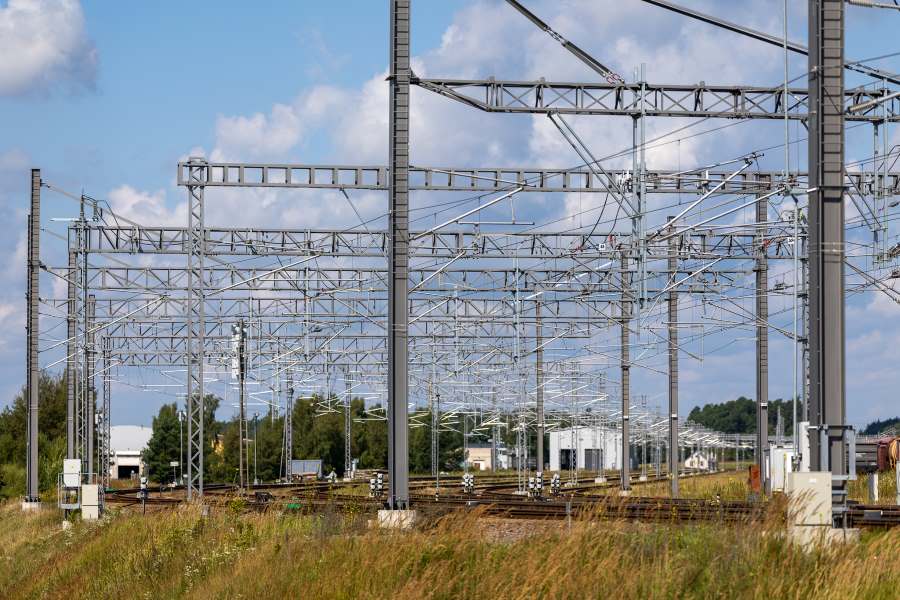
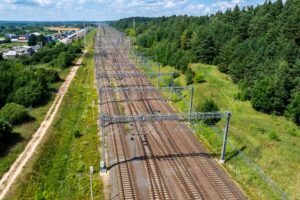
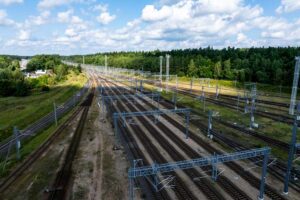
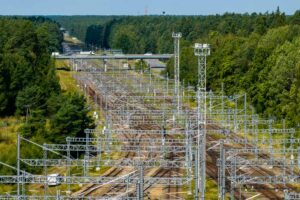
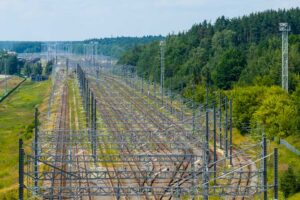
LTG Group company LTG Infra has completed the electrification project of the Vilnius railway junction, one of the three stages of the electrification of the Vilnius–Klaipėda railway line. The project included the electrification of the Vilnius bypass, covering the sections Kyviškės–Valčiūnai–Vaidotai–Paneriai and Vilnius–Kirtimai–Valčiūnai, creating the conditions for more efficient, sustainable, and environmentally friendly rail operations.
The electrification of the Vilnius–Klaipėda railway line is one of the largest railway infrastructure modernization projects in Lithuania’s history. As the country’s busiest railway corridor, its modernization is essential for the competitiveness, sustainability, and integration of Lithuania’s transport system into the European transport network.
“Completing the electrification works of the Vilnius railway junction is an important step towards our strategic goal of creating a modern, sustainable, and competitive railway network in Lithuania. By electrifying the country’s main railway artery, we are not only reducing the environmental impact of the transport sector but also investing in long-term value for the state, businesses, and passengers,” says Vytautas Radzevičius, Director of Strategy and Business Development at LTG.
As part of the project, a 25 kV overhead contact line system was installed within the Vilnius railway junction. The length of the electrified section reaches 42 km, while the total track length covered amounts to approximately 114 km. The Lentvaris traction substation was also reconstructed.
According to Vytis Žalimas, CEO of LTG Infra, although the electrification of the Vilnius railway junction is only one stage of the broader Vilnius–Klaipėda electrification project, it represents a significant contribution to the overall initiative.
“Each completed electrification stage brings us one step closer to our common goal of creating a modern and sustainable electrified railway corridor between Vilnius and Klaipėda. Once the entire project is completed, 363 km of railway line will be electrified, creating conditions for more sustainable transportation of both passengers and freight. I am grateful to the large team of LTG Infra professionals and our partners who are helping to build a modern, reliable, and environmentally friendly railway system,” says V. Žalimas.
The electrification of the Vilnius railway junction is one of the three stages of the Vilnius–Klaipėda railway line electrification project. Together with the other project components, it contributes to the decarbonization of rail transport, reduced CO₂ emissions, and the achievement of the European Union’s Green Deal objectives.
Before the implementation of the project, only around 8% of Lithuania’s railway network was electrified. Upon completion of the entire Vilnius–Klaipėda electrification project, the share of electrified railways in the country will increase to nearly 28%.
The full Vilnius–Klaipėda electrification project includes the construction of 363 km of overhead contact line infrastructure, the installation and connection of six traction substations in Lentvaris, Žeimiai, Linkaičiai, Tarvainiai, Kretinga, and Žasliai to the Litgrid electricity transmission network. In addition, eight autotransformer stations are being constructed to ensure a stable power supply to the overhead contact line system.
The environmental benefits of the project are significant. It is estimated that electrifying the country’s main railway line will reduce annual carbon dioxide (CO₂) emissions by more than 150,000 tonnes. In addition, diesel consumption, the transport sector’s dependence on fossil fuels, and train-generated noise will be reduced.
The modernized and electrified Vilnius railway junction will enable faster movement of passengers and freight, shorter transit times, and greater competitiveness of rail transport. The design and technical parameters of the overhead contact line system allow train operations at speeds of up to 160 km/h.
The Vilnius railway junction electrification project was implemented under the 2014–2020 European Union Funds Investment Action Programme and was partially financed by the EU Cohesion Fund. The project’s value amounts to EUR 58 million. Total investment in the entire Vilnius–Klaipėda railway line electrification project is approximately EUR 457 million, of which around EUR 200 million is financed through the European Union Cohesion Fund.
BackNext