News
2026-10-02
Lithuania’s Progress in Building a Resilient Railway System Presented to European Partners in Brussels
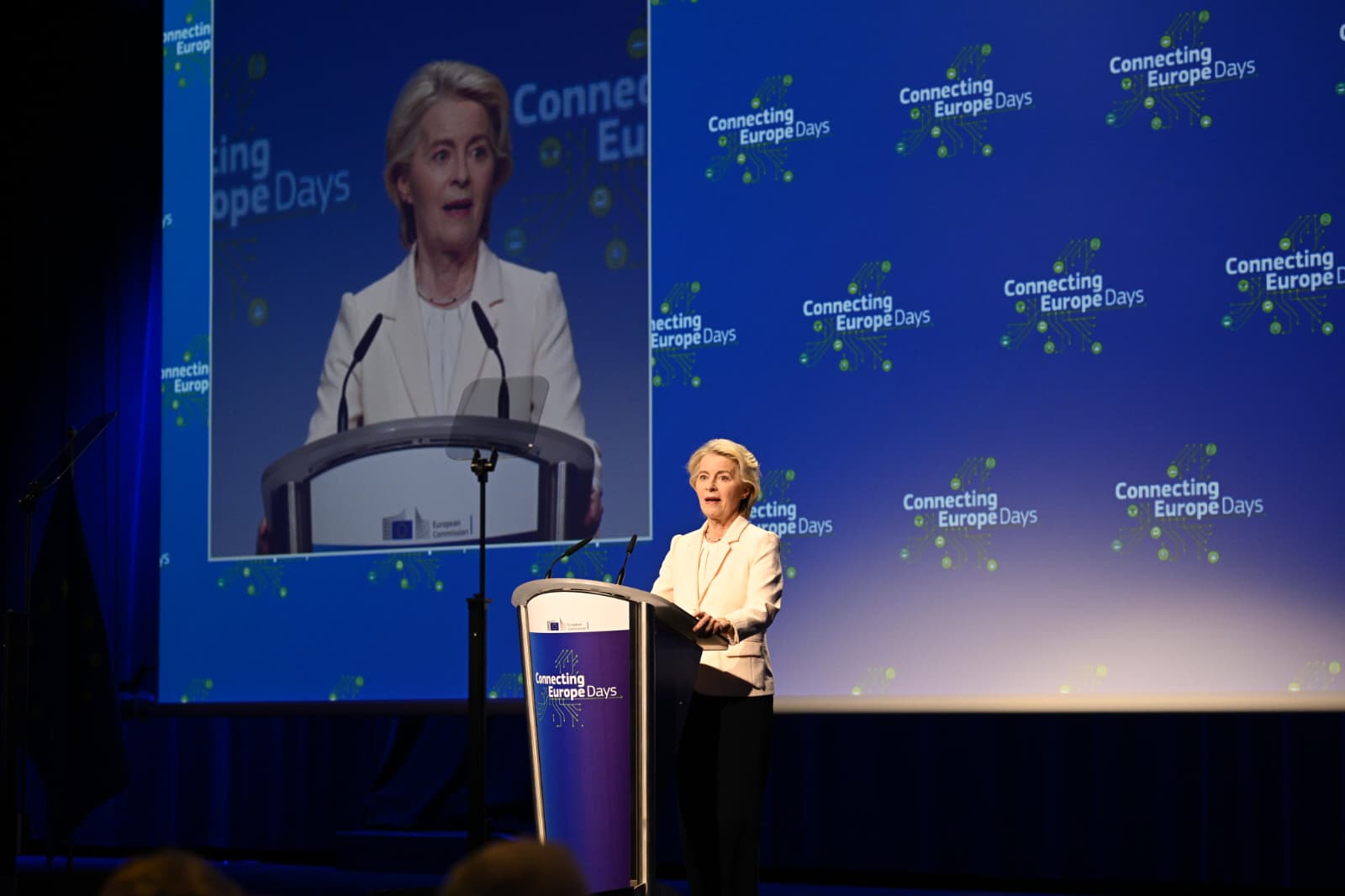
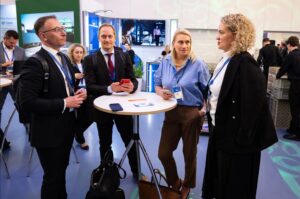
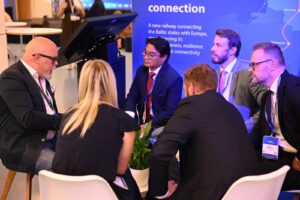
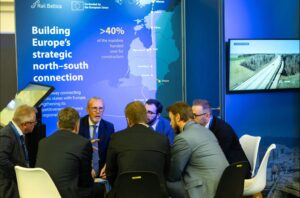
At Connecting Europe Days 2026 in Brussels, the LTG Group, together with partners from the other Baltic States, presented Lithuania’s progress in integrating into the common European railway system. Meetings with representatives of the European Commission, the European Climate, Infrastructure and Environment Executive Agency (CINEA), EU Member States and the transport sector focused on the progress of Rail Baltica, the transition to the European standard gauge, infrastructure resilience, military mobility and the need for continued funding.
Connecting Europe Days is one of the most important events in European transport policy.
“Today’s geopolitical situation once again confirms that transport infrastructure is not only a driver of connectivity and economic growth, but also a cornerstone of Europe’s security. Rail Baltica is one of the key projects strengthening the integration of the Baltic States into the European transport network, increasing the resilience of our region and enhancing military mobility. Therefore, close cooperation with European Union institutions and partners remains essential to successfully achieve these strategic objectives,” says Roderikas Žiobakas, Chancellor of the Ministry of Transport and Communications of Lithuania.
During the event, the LTG Group presented Lithuania’s railway transformation agenda. This year, the Lithuanian Railway Architecture Study 2050 was completed.
“Lithuania’s integration into the common European railway system goes beyond the construction of new tracks. We must reduce technological and operational dependencies, strengthen the reliability of supply chains and transition to European data exchange solutions. Connecting Europe Days provides an opportunity to present the broader picture of Lithuania’s transformation and work with partners to identify solutions that ensure the continuity, financial sustainability and regional alignment of this process,” says Arūnas Rumskas, Acting CEO of the LTG Group.
Long-Term Vision
One of the initiatives discussed in Brussels was the completed Lithuanian Railway Architecture Study. Its objective is to establish a long-term vision for the railway network and a roadmap for transitioning to the European standard 1435 mm gauge.
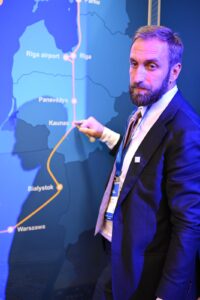
The analysis indicates that the most promising approach is to continue the development of the operating European-gauge railway from the Polish border through Kaunas to Latvia, followed by the implementation of the Vilnius-Kaunas connection, the link to Klaipėda and, ultimately, regional connections. The phased expansion of the European-gauge network will support the growth of passenger and freight transport, enhance regional security and accelerate the realization of infrastructure benefits.
“LTG has demonstrated that the 1520 mm gauge network will remain important for transport across the Baltic region. However, the transformation of physical infrastructure is already being complemented by the LTG Group’s FREE Rail programme. Through this programme, we are strengthening technological and operational independence while reducing reliance on solutions controlled outside the EU and by countries that are not aligned with EU interests,” emphasizes Rumskas.
Over the past three years, the LTG Group has reviewed more than 2,000 components and systems used in railway operations, identified alternatives and established partnerships with suppliers from trusted countries.
Rail Baltica Progress and Funding
A separate part of the discussions at Connecting Europe Days was dedicated to the implementation of Rail Baltica. Delegations from Rail Baltica partner organizations exchanged experiences in Brussels with representatives of other major strategic infrastructure projects across Europe.
According to Mindaugas Ivanavičius, Head of Rail Baltica in Lithuania, dialogue with the European Commission and CINEA is particularly important when considering future funding decisions.
“We had the opportunity to demonstrate to international partners the consistent progress of works, the effective use of EU investments, our approach to project management and risk management, as well as the decisions, including complex ones, required to ensure smooth project implementation,” says Ivanavičius.
In Lithuania, construction of the Rail Baltica main line is underway in the direction from Kaunas towards Panevėžys. European-gauge tracks are being laid, while design and preparatory activities continue in other sections of the corridor. Across the entire Rail Baltica main line, more than 40% of the route has either been prepared for construction or is already under construction.
To date, up to 85% of the project has been financed through the Connecting Europe Facility (CEF), with the remaining share covered by national funding.
“Connecting the Baltic region to the EU infrastructure network is a strategic development decision. At the same time, it is our responsibility as project implementers: the more clearly we can demonstrate progress and tangible results, the stronger the foundation we create for financial decisions at both European and national levels. Without long-term support, the Baltic States would not be able to deliver an investment megaproject of this scale on their own,” says Ivanavičius.
BackNext