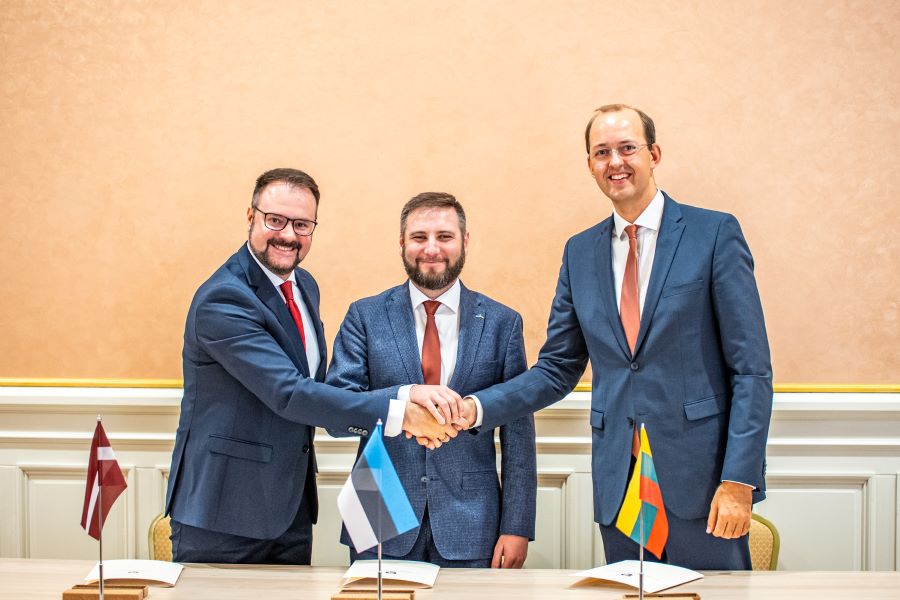
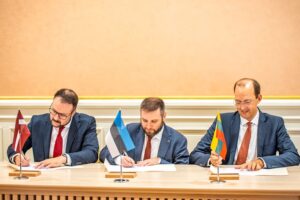
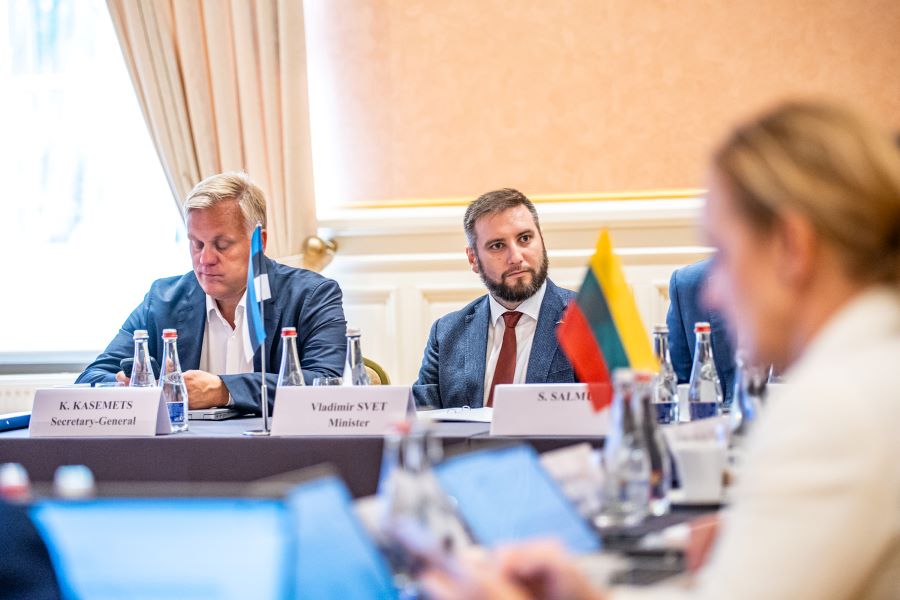
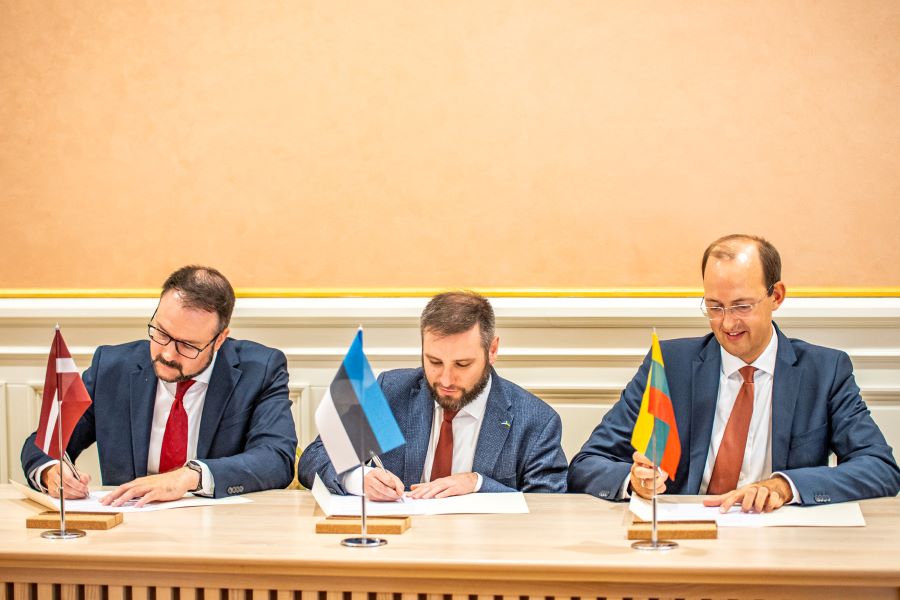
Lithuanian, Latvian and Estonian Transport Ministers met in Palanga on Friday to sign a joint document expressing their aim to maintain and further increase European funding for strategic transport infrastructure projects that improve military mobility links to Europe.
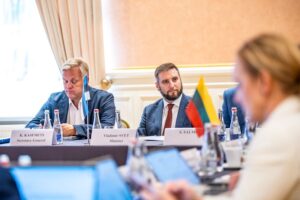
In the joint non-paper “CEF III – a focused approach to bring the EU closer together”, Marius Skuodis, Lithuanian Minister of Transport and Communications, Kaspars Briškens, Latvian Minister for Transport, and Vladimir Svet, Estonian Minister of Infrastructure, underlined that in the next EU multiannual financial framework (MFF), Connecting Europe Facility (CEF) has to remain one of the key instruments of the EU budget with appropriate financing in order to meet the growing needs of the EU and its Member States in transport, energy and electronic communications sectors.
According to the ministers, in the context of the new MFF starting in 2028, increased European funding will be crucial to further develop missing cross-border transport links, accelerate the Rail Baltica project, and integrate the Baltics into the European transport system. They also draw attention to the need to provide more funding for military mobility.
“The current geopolitical situation encourages us to integrate much more rapidly into the European rail network and to increase the quality and capacity of the transport infrastructure of our region. The construction of the European standard gauge Rail Baltica railway, the European rail link to Klaipėda, and the implementation of other important strategic projects, also improving military mobility, are areas where continued EU support is of particular importance to Lithuania,” said Minister of Transport and Communications Marius Skuodis.
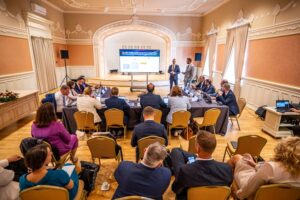
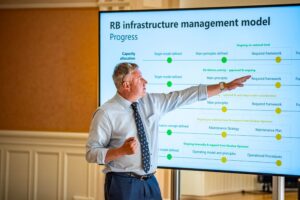
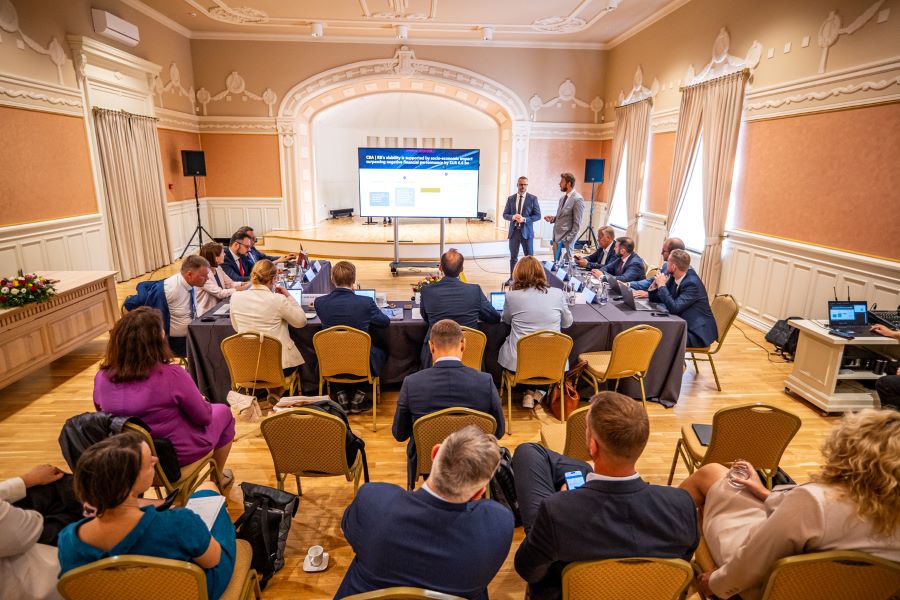
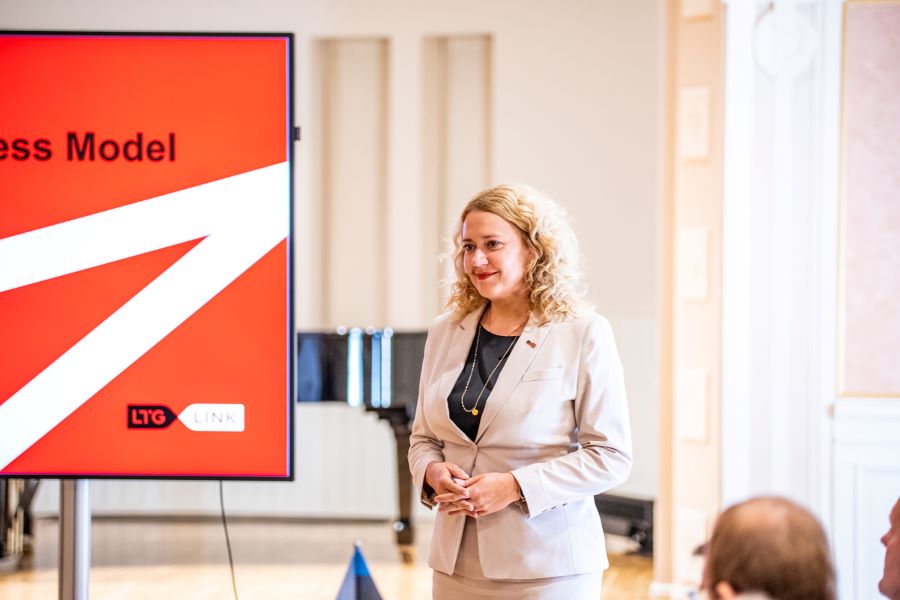
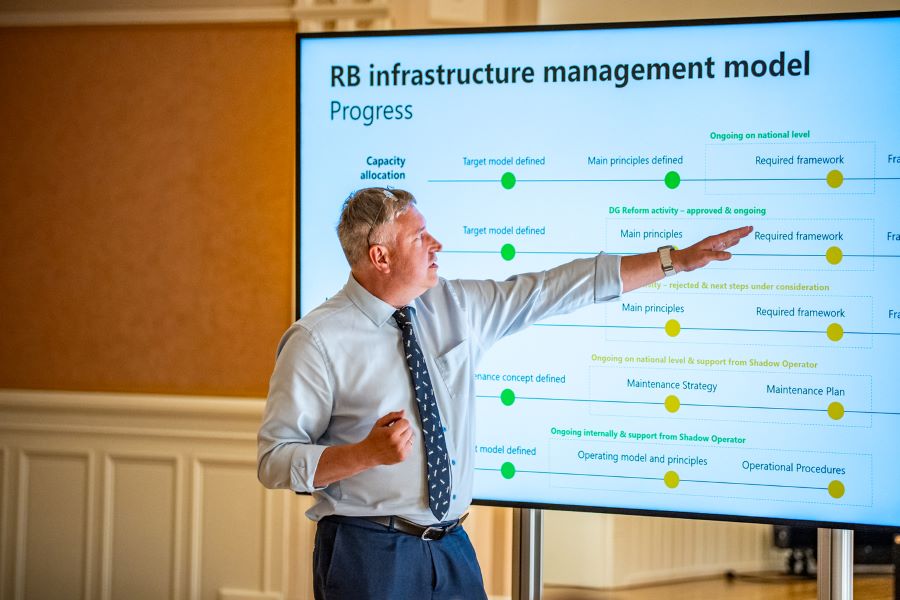
In the meeting, Kristina Meidė, CEO of LTG Link, discussed the alignment of passenger transport services and procuring the necessary rolling stock; Vytis Zalimas, CEO of LTG Infra, presented the preparation for hybrid network management; and Gediminas Seckus, LTG CRO, delivered FREE Rail program which enables the digital exchange of rail freight data in cooperation.
“The purpose of the annual ministerial meeting is to discuss accelerating construction and future solutions. We are focusing on key actions to successfully complete the project, integrate it into the existing railway system and prepare for the transition to the 1435 mm network model,” said Arenijus Jackus, Head of Rail Baltica Lithuania.
The Connecting Europe Facility is one of the main sources of funding for the development of EU transport infrastructure, including Rail Baltica.
This year, the European Commission has allocated an additional amount of around EUR 1.2 billion for the development of Rail Baltica in the Baltic countries, of which Lithuania’s share is around EUR 458 million. This is the largest funding Lithuania has ever received from the Connecting Europe Facility.
The entire Rail Baltica project, connecting the Baltic states to Europe, is scheduled to be completed in 2030, with the Lithuanian-Polish link to be accomplished in 2028.
The need to strengthen the CEF, as well as to provide more funds for military mobility at European level, was also highlighted in the Declaration of the Ministers of Transport of Central Europe and the Baltic states, signed this year in the Czech Republic.
Rail Baltica is the largest railway infrastructure project in the history of the Baltic States, during the implementation of which an electrified European-standard two-track railway will be built, connecting Warsaw, Kaunas, Vilnius, Panevėžys, Riga, Parnu and Tallinn. The total length of the Rail Baltic railway line in the Baltic States is 870 km: 392 km in Lithuania, 265 km in Latvia, and 213 km in Estonia.
 LTG