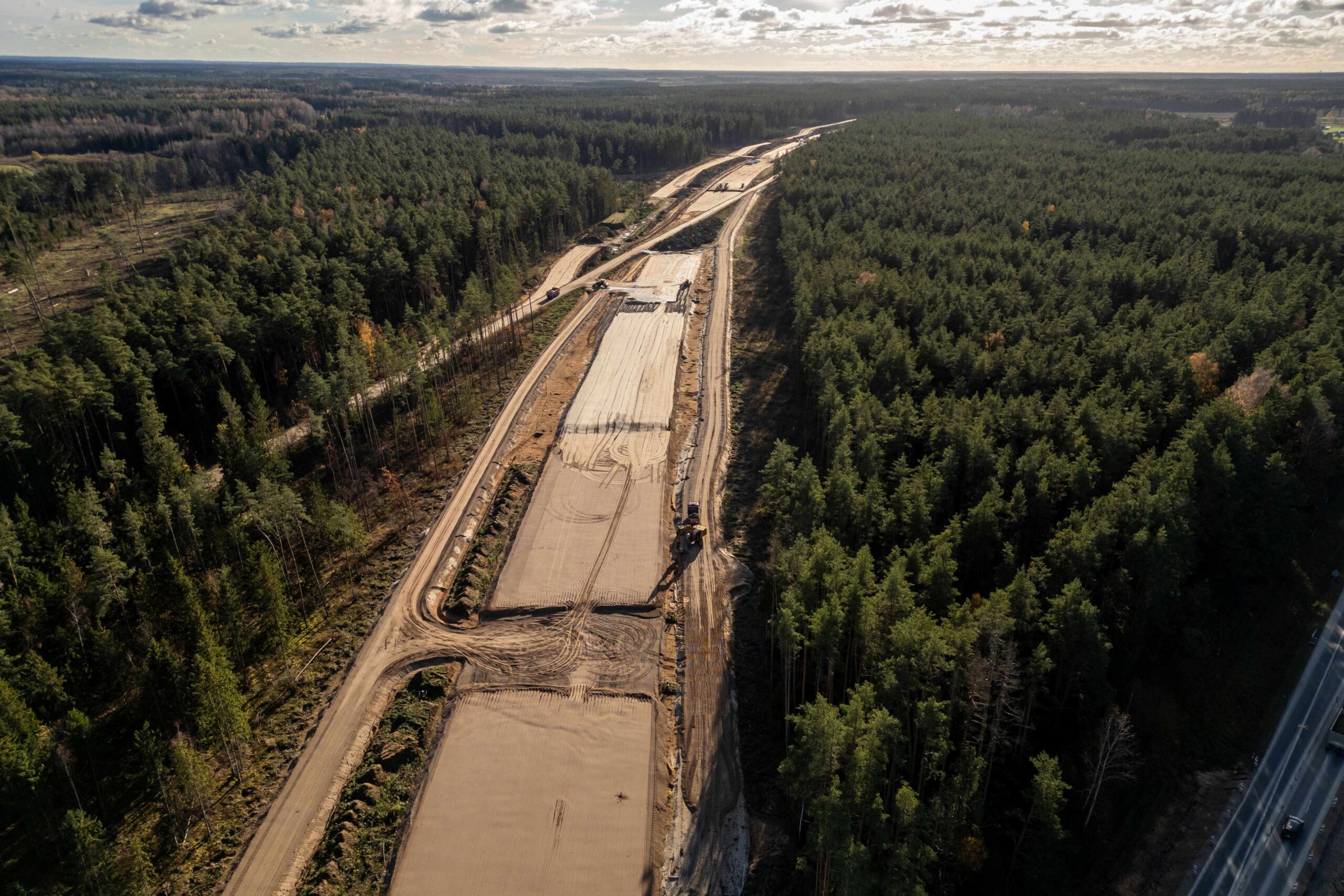
LTG Infra and contractor HISK, which signed construction contracts for three Rail Baltica sections last year, have resolved a dispute regarding one of the contracts and agreed to terminate it. LTG Infra intends to reannounce the construction tender later this year.
“Rail Baltica is a strategically important infrastructure project, so the primary objective of all decisions taken is to ensure effective project management and continuity of construction works. LTG Infra’s priority is to manage emerging risks, reach agreements with partners when necessary, and promptly continue activities critical to the project’s implementation,” says Mindaugas Ivanavičius, Rail Baltica in Lithuania Director.
At the end of 2025, LTG Infra and HISK signed a construction contract for the Berčiūnai–Joniškėlis section. However, the preparation of the documentation required for the execution of the works took longer than anticipated. As a result, a dispute arose between the parties regarding the contract terms and implementation deadlines.
To avoid lengthy court proceedings and the associated risks, the parties reached an agreement through mediation to terminate the contract and settle their mutual obligations. LTG Infra will launch a new procurement procedure under an accelerated timeline.
Construction activities are progressing successfully on other sections of the project, including embankment and engineering structure works, track superstructure construction and turnout installation, the modernisation of the Poland/Lithuania state border–Kaunas section, as well as signalling subsystem and design works for individual project components.
Rail Baltica is a strategic project for the LTG Group, Lithuania, and the European Union, and it is the largest railway infrastructure project in the history of the Baltic States. Once completed, it will deliver an electrified European standard gauge railway line connecting Lithuania, Latvia, and Estonia with Central and Western Europe, strengthening regional integration, civil and military mobility, and the overall resilience of the transport system.
 LTG